Root Reborn became a better conversation after Yuma pushed back.
That does not mean Yuma is automatically right on every point. It does not mean the proposal is dead. It does not mean the optimistic case disappeared.
It means the market finally has the right posture: slow down, inspect the mechanism, ask who benefits, ask who carries hidden risk, and demand safeguards before a major flow change touches Root staking.
Yuma published an article on X on June 18, 2026, titled “Root Reborn Analysis.” The short version is clear. Yuma says it held preliminary discussions with OTF around the concept. It also says it has never supported the proposal in its current form. Yuma’s view is that the current design carries serious unmitigated risk around validator incentives, regulatory exposure, structural fragility and user confusion.
That is a useful intervention.
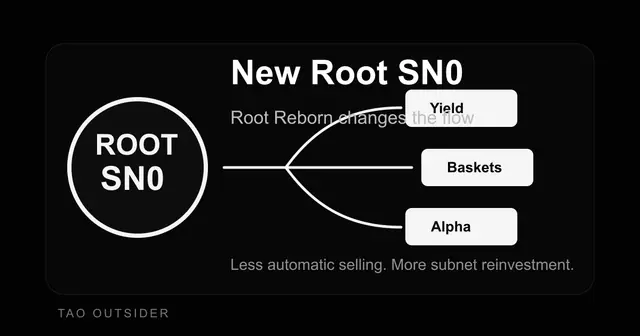
The Bittensor ecosystem has a habit of moving fast when a mechanism sounds elegant. Root Reborn sounds elegant. It turns Root from an automatic subnet seller into a subnet reinvestment layer. It could reduce recurring sell pressure on subnet alpha. It could make validator allocation visible. It could keep more capital circulating inside Bittensor instead of routing yield back into TAO immediately.
Those are real benefits.
The problem is that real benefits do not cancel real risks.
What Yuma is warning about
Yuma’s critique has several layers. The center is validator power.
Root Reborn would make validators more than passive Root yield conduits. They would choose subnet baskets for Root yield. In practice, stakers would be exposed to validator allocation decisions unless they claim continuously or route elsewhere.
That creates a new question: are validators being evaluated as infrastructure operators, subnet judges, capital allocators or all three at once?
Today, a Root staker can think in simpler terms. Which validator do I trust? What is the apparent yield? Is the validator reliable? Is my staking surface clear?
Under Root Reborn, the better question becomes much harder:
Who is deciding where my yield goes, what incentives do they have, what subnets do they already own or support, how liquid are those pools, how visible is the basket, and how much slippage appears when people exit?
Yuma is right to force that question into the open.
The moral hazard point is serious
The strongest part of Yuma’s argument is moral hazard.
If validators direct recurring Root yield into subnet alpha, then subnet operators have a new reason to lobby validators. Validators may also have existing positions, commercial relationships or ecosystem commitments. Some of that is normal in a small ecosystem. Some of it can become unhealthy if the protocol turns those relationships into capital flow.
The optimistic answer is market discipline. Bad allocators underperform. Stakers leave. Better allocators win.
That answer sounds clean. It depends on visibility, user understanding and low friction movement. Those are not guaranteed.
Many Root stakers are there because Root is simpler than subnet selection. If the interface does not show the basket clearly, the risk is not really priced by the user. If custody providers, exchanges or front ends cannot expose the new behavior clearly, confusion becomes part of the mechanism.
That UI problem reaches user protection, market integrity and product design at the same time.
Root Reborn still solves a real problem
The caution should not erase the reason Root Reborn exists.
The current Root model has a structural issue. Root receives subnet dividends and converts them back into TAO. That can act as recurring sell pressure on subnet alpha. If Bittensor wants subnet markets to become deeper, more investable and more useful, the protocol has to care about flow direction.
Root Reborn tries to flip that flow.
Instead of yield behaving like automatic selling, validators could route it into subnet baskets. That could create buy pressure for selected subnets and force validators to compete on allocation.
I still think this direction is interesting.
But the proposal should earn trust through details, not through narrative.
The PR already admits some of the hard parts
The OpenTensor Pull Request for Root Reborn is still open. The PR itself lists known follow ups before mainnet scale, including weight metering, basket fan out caps, slippage and self dealing guards, and a migration that may need to become multi block.
That matters more than the slogan around the proposal.
A mechanism that touches recurring emissions, AMM swaps, validator weights, escrow, claims and user exits cannot be evaluated only by asking whether it reduces sell pressure.
The right checklist is wider:
- Can users see the validator basket clearly?
- Can validators opt into a transparent allocation policy?
- Can stakers opt into the new behavior knowingly?
- Are there slippage limits when yield is routed?
- Are there caps on basket fan out and execution cost?
- Are conflicts of interest visible?
- Can custody providers explain the claim path?
- What happens in a broad unstaking event?
- How does the system behave when a subnet dissolves?
- Who measures validator performance fairly across different entry times and liquidity profiles?
If the answer to those questions is vague, the market should stay cautious.
Why this debate is healthy for Bittensor
This is exactly the kind of argument Bittensor needs more often.
The ecosystem is moving from pure experimentation into financial infrastructure. Subnet alpha is no longer only a niche game for insiders. Root staking, validator selection, TAO custody, subnet baskets and institutional access are becoming connected surfaces.
When that happens, the standard has to rise.
The correct response to Yuma is neither tribal defense nor automatic agreement.
The correct response is to separate three things:
First, the direction. Root Reborn wants to keep more capital inside the Bittensor economy. That is a serious idea.
Second, the implementation. The current PR still needs review, safeguards and testing before anyone treats it as ready for mainnet.
Third, the user layer. Root stakers need plain visibility. If the user thinks they are holding a simple TAO yield position while the yield is exposed to a changing basket of subnet alpha, the product has failed even if the code works.
That is where I land.
Root Reborn is one of the most important Bittensor proposals to watch. Yuma’s critique does not make it less important. It makes the review more important.
The best version of Root Reborn would reduce structural subnet sell pressure, make validators more accountable, and create visible allocation competition.
The weak version would add hidden complexity, reward relationships over merit, confuse passive stakers, and turn a clean staking surface into a basket product without enough consent or visibility.
Bittensor should aim for the first version and refuse to rush into the second.
For now, the stance should be simple: attention, caution, testing and better interfaces before conviction.
Sources checked on June 19, 2026: Yuma Root Reborn Analysis on X, OpenTensor Root Reborn Pull Request 2759, Yuma social disclaimer, and Tao Outsider’s earlier Root Reborn article.
Was this article useful?
One tap feedback helps us improve each post.