Analysis
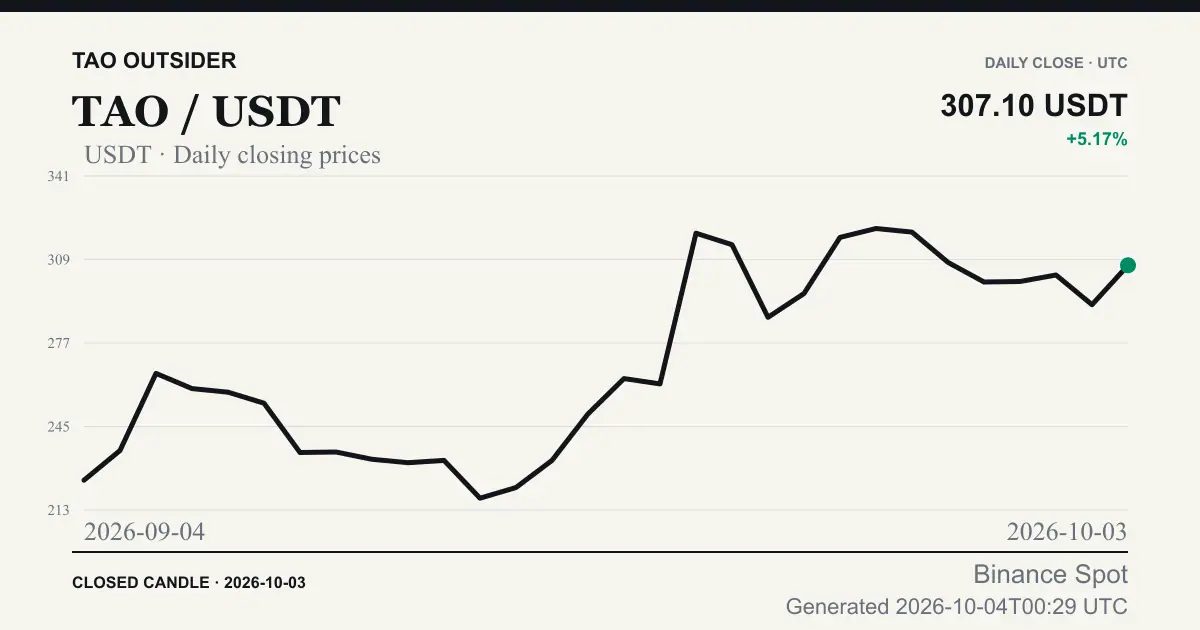
TAO daily close: Bittensor recovers 5.17% to 307.10 USDT
TAO closed October 3 at 307.10 USDT on Binance Spot, up 5.17%. The session's 308.10 high and 287.90 low frame the next daily confirmation levels.
Latest
Current Bittensor stories, subnet reads, Opentensor changes and market context selected for readers who want sources before opinion.
Journal desk
TAO closed October 3 at 307.10 USDT on Binance Spot, up 5.17%. The session's 308.10 high and 287.90 low frame the next daily confirmation levels.
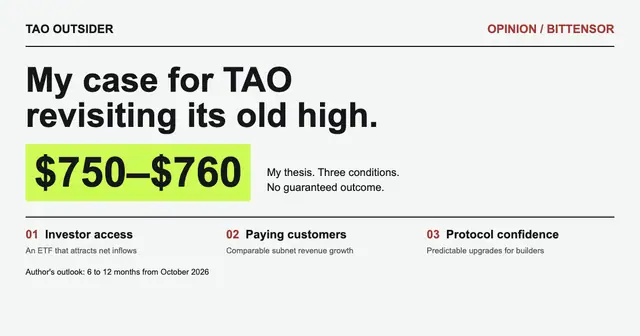
My Bittensor thesis rests on broader investor access, paying subnet customers and a dependable protocol. Here is what could support a TAO return to its high.
Macrocosmos outlines an IOTA SDK for distributed training on Bittensor SN9. What developers would control, and what remains a preview.
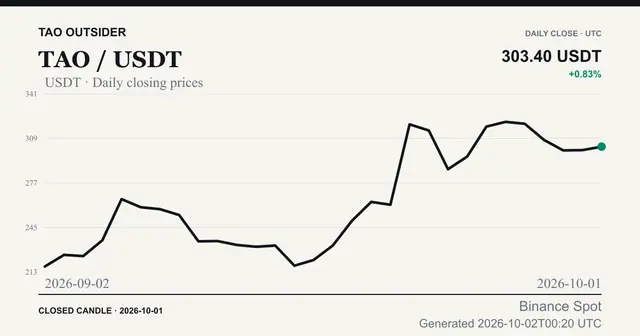
TAO closed October 1 at 303.40 USDT on Binance Spot, up 0.83%. The session's 312.40 high and 299.70 low frame the next daily confirmation levels.
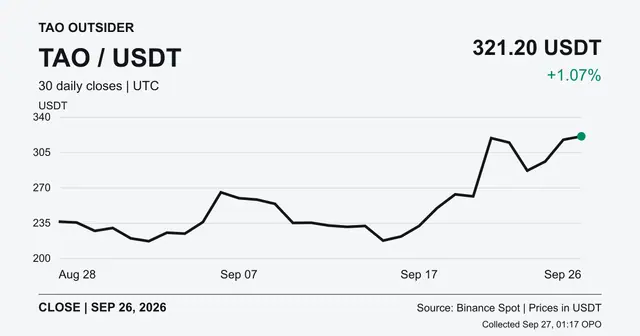
TAO closed September 26 at 321.20 USDT on Binance Spot, up 1.07%. The 341.30 high and 309 low frame the next daily confirmation levels.
Lily Venice examines Bittensor subnet buybacks, Lium's revenue claims and Bitcast's dashboard, asking how burns should compete with reinvestment.
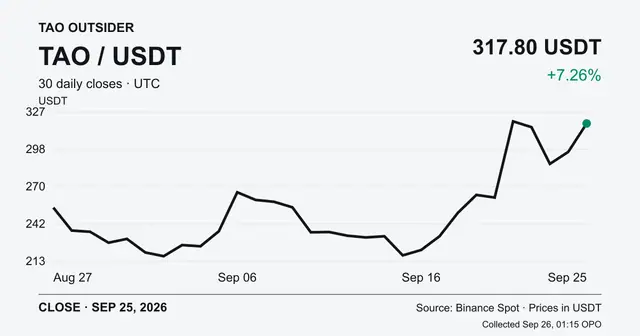
TAO closed September 25 at 317.80 USDT on Binance Spot, up 7.26%. The 321 session high and 326.50 recent high frame the next daily test.
Cascade SN91 brings six forecasting models into one API with Ephemeris, opening a practical route into time series AI for developers and agents.
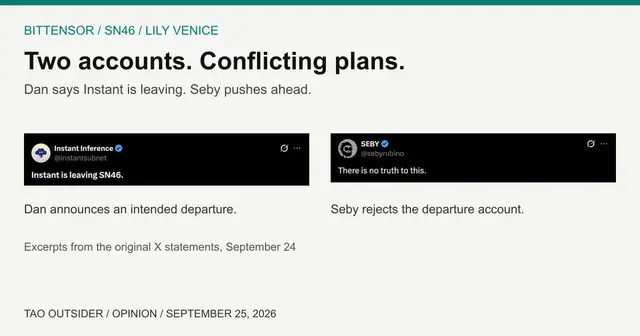
Two Instant accounts and conflicting plans for Bittensor SN46. Lily Venice follows the dispute, the real estate pivot and what it means for the TAO ecosystem.
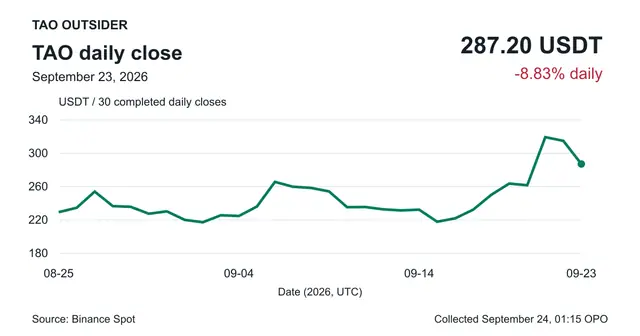
TAO closed September 23 at 287.20 USDT on Binance Spot, down 8.83%. The daily low and previous close frame the next test after the pullback.
Finney runs runtime 469, with bounded dust handling for Root claims and weight refunds on selected failed staking calls. Here is who is affected.
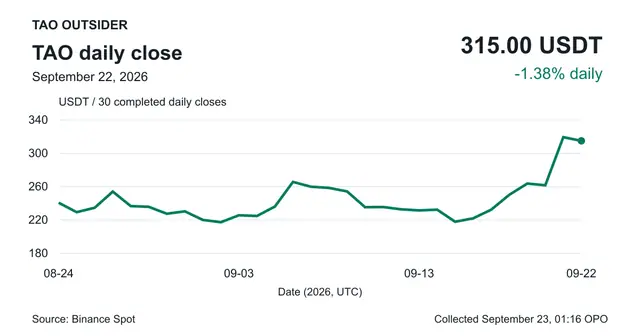
TAO closed September 22 at 315 USDT, down 1.38% on Binance Spot. The session reached 326.50 as trading volume eased after Monday's rally.
KubeTEE SN90 reports adding image generation and video with audio to its public gateway, expanding the workloads served by its miner clusters.
ORO's September 17 update replaces ShoppingBench with ORO Bench, giving SN15 agents shared qualifying tasks and separate checks for seven task families.
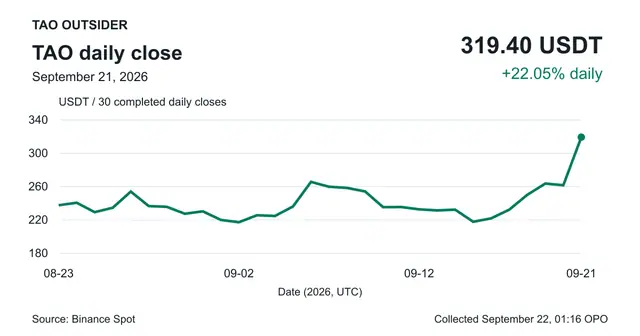
TAO ended September 21 at 319.40 USDT on Binance, up 22.05% and near its daily high. The 319.70 high frames the next test for Bittensor.
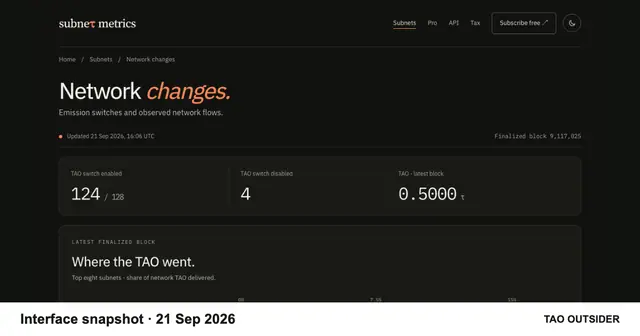
Subnet Metrics puts Bittensor's TAO emission switches beside observed network flows, with separate treatment of alpha rewards and historical coverage.
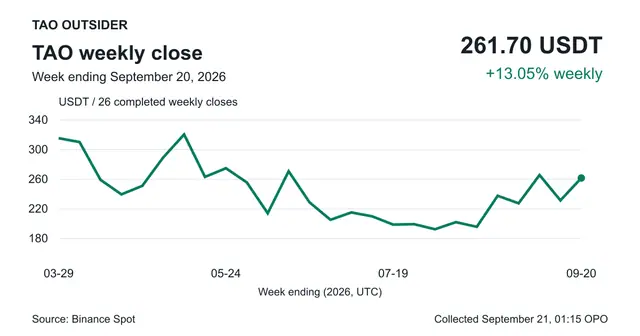
TAO closed the week ending September 20 at 261.70 USDT, up 13.05%. The 50-week average and the weekly high frame the next test.
Bittensor's Numinous describes how a hindsight ledger could grade miner reasoning. Its scoring documentation lists the Reasoning pool as inactive.
Yuma's September 14 update puts the reported dollar value of TAO and subnet tokens staked with its validator above $200 million.
Runtime 467 halves two native fee coefficients, lowers the EVM base-fee setting and subsidizes Root claim work while retaining execution limits.
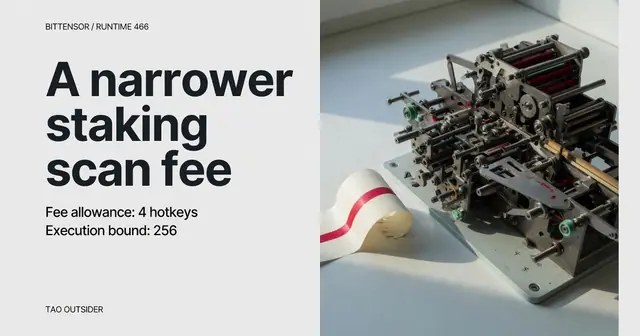
Finney reports runtime 466, whose code prices selected staking scans with a four-hotkey fee allowance while preserving the full execution bound.
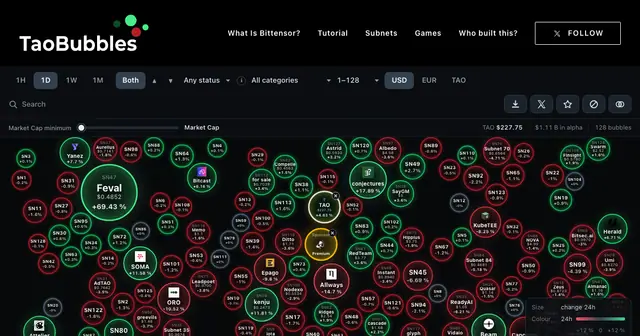
A hands-on look at TaoBubbles, its Bittensor subnet map, filters and market tables, plus six features we would like to see for deeper research.
A Subtensor node change ends repeated lookups of unavailable history after warp sync, addressing a reported stall in Ethereum-compatible mapping.
Bittensor's Conjectures SN66 publishes a paper, Lean source and review record for a claimed negative answer to Erdos problem 96.
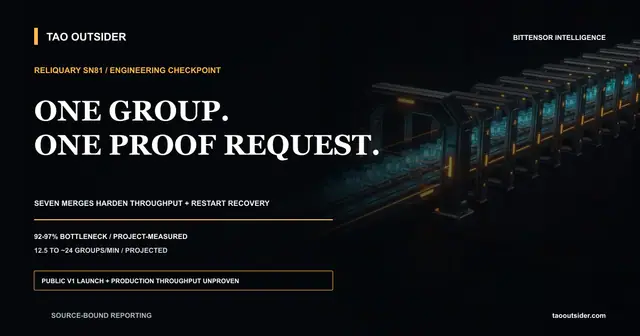
Seven merged Reliquary changes target proof batching, checkpoint races, restart-safe weights and stalled duplicate prompts without proving a public V1 launch.
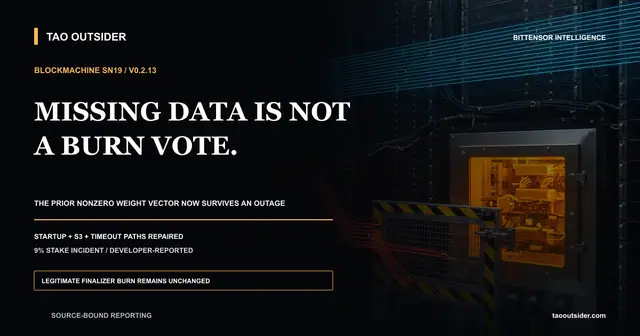
Blockmachine's validator preserves the last nonzero on-chain weight vector when startup failures hide traffic data, instead of treating blindness as a 100% burn signal.
Lium v0.0.43 through v0.0.45 add workspace isolation, node-status tooling, account audit logs and a one-command provider registration path.
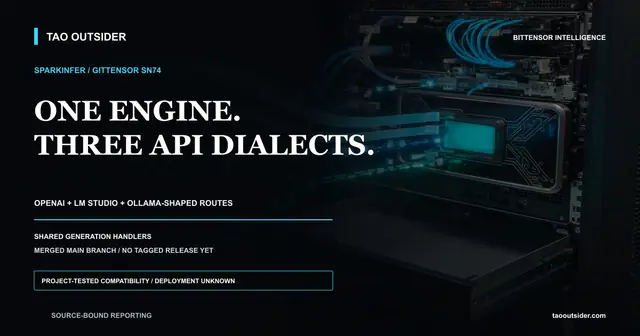
SparkInfer has merged LM Studio and Ollama-compatible REST surfaces that translate into its existing generation handlers without creating a second engine.
Pareton SN10 has merged SGLang-native build, serving and scoring support with a pinned Qwen3.8-27B FP8 campaign path, but launch remains an operator step.
Inference Labs release 14.14.3 holds prior Bittensor weights when every non-owner miner receives zero, closing an owner-only normalization path.
Lium v0.0.39 adds JSON output, documented error handling and a GPU-spec rental flow that selects the cheapest eligible listed node.
Finney is running Bittensor Runtime 455, which blocks EVM, contracts and crowdloan calls from NonTransfer and NonFungible proxies while preserving broader proxy roles.
Verathos SN96 v0.2.1 adds an optional cross-machine serving package with worker joining, authenticated weight retrieval and startup readiness checks.
OpenRoboto now documents a 15% simulation, 42.5% pi0.5 and 42.5% LingBot-VLA 2.0 allocation across three separate robotics tracks.
Lium's open SDK now checks whether a pod was created before retrying an ambiguous rent request and reuses one idempotency key for the bounded retry.
Zeus v2.1.4 excludes established miners from an affected challenge's weight calculation after eight consecutive penalties, with a four-week grace period.
Fugal reports closing five TEE verifier exploit classes and three weight-blocking defects in a pre-Finney Bittensor LLM router release.
SparkInfer v0.5.5 brings bounded video input, reusable sequential prefixes and a concurrency reliability fix to Gittensor's inference runtime.
Leadpoet SN71 has merged a Python-agent submission workflow after an isolated testnet exercise, while production intake, rewards and chain writes remain disabled.
Ridges SN62 release v0.3.0 makes uploads, scoring policy, scheduling, leaderboards and emission allocation aware of multiple coding-agent competitions.
Finney is running Bittensor Runtime 454, which narrows coldkey-wide Root claim accounting, handles minimum-unit basket redemptions and restores one contract proxy path.
Score has previewed quantized SAM3 tracking inside Score Studio, an upcoming computer-vision product connected to Bittensor subnet 44.
True Performance Network has opened TPN-003, a Bittensor competition to compress a Gemma4 12B model below an 8 GiB RAM ceiling across five benchmarks.
Bitsec has launched Sentios, a continuous code-review service built around competing AI security agents, public pricing and repeat scans after meaningful code changes.
A Chutes SN64 research trace covers 6.12 billion LLM requests and shows why prefix-aware routing matters as serving workloads change.
TaoFlows has expanded its Bittensor flow terminal with subnet swaps, watchlists, on-chain alerts and a portfolio dashboard.
Bitcast SN93 now documents a versioned application API that lets specialist creator products use its campaign and scoring engine.
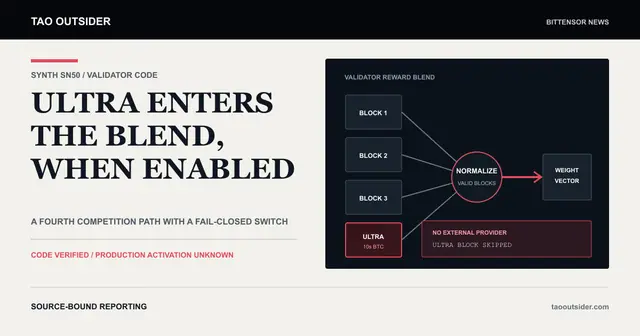
Synth SN50 code can blend externally supplied Ultra scores into validator rewards as a fourth competition, but the path stays off without a provider.
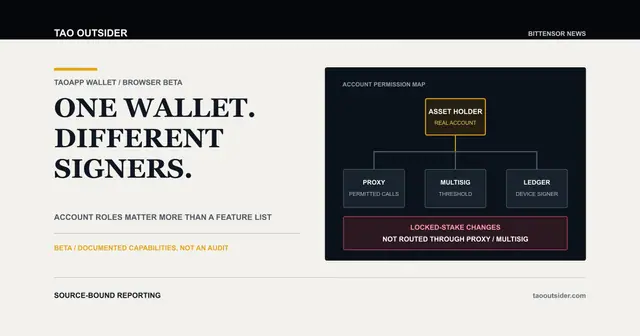
TAOApp Wallet has launched a browser beta for Bittensor with documented Ledger, proxy and multisig account paths, plus a locked-stake limitation.
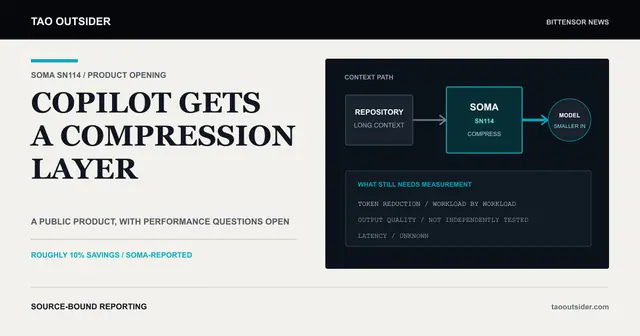
SOMA SN114 has opened a context-compression product for GitHub Copilot, with roughly 10% token savings claimed for DeepSeek V4 Pro.
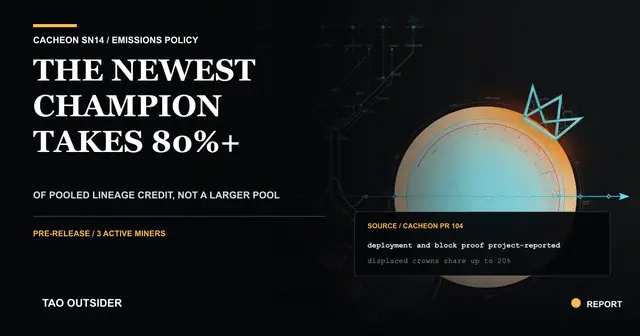
Cacheon SN14 says its new emissions policy settles every pass and gives the newest champion at least 80% of a lineage's existing pooled credit.
Gittensor SN74 code now measures verified output tokens for serving rewards as its RTX 5090 model reaches 303,714 Hugging Face API-reported downloads.
OpenRoboto SN80 has made LingBot-VLA 2.0 the baseline for its current simulation tournament, with promotion tied to project-defined scoring conditions.
The Top 32 emission gate does not end the race. It may create Bittensor's most asymmetric subnet research opportunity below the line.
Compelle SN82 repository code scores title fights with complete seat-balanced pairs, a win margin and paired significance while rejecting prompt extraction.
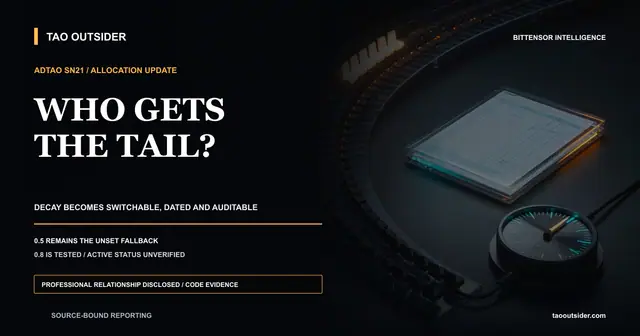
AdTAO SN21 published code and a preview tool for changing allocation-tail decay on an effective date while recording the curve used in its audit.
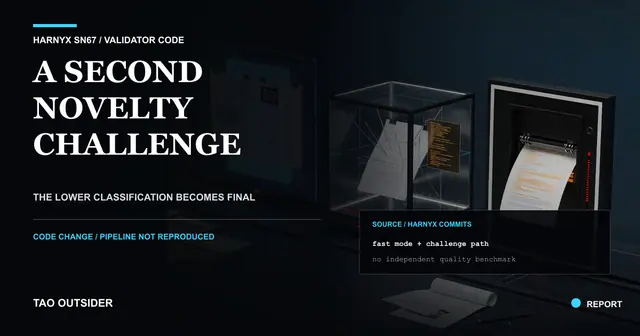
Harnyx SN67 code adds fast-mode task routing, a second novelty challenge and clearer failure attribution to its Bittensor scoring path.
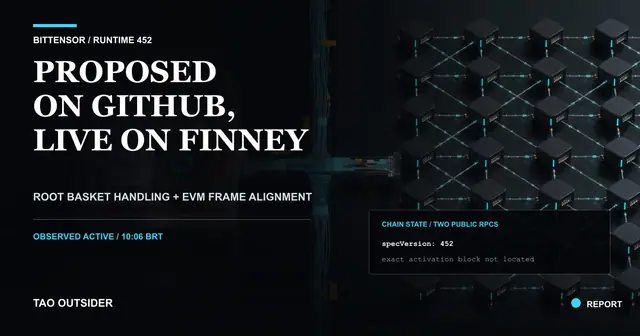
Finney is executing Bittensor Runtime 452, adding bounded Root basket failure handling and stricter EVM precompile call-frame checks.
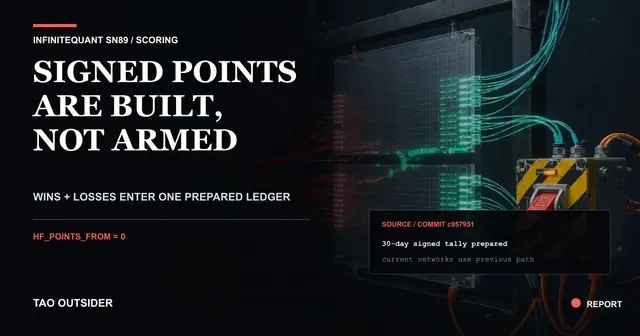
InfiniteQuant SN89 code prepares a 30-day signed-points ledger for wins, losses and washes, while HF_POINTS_FROM remains zero.
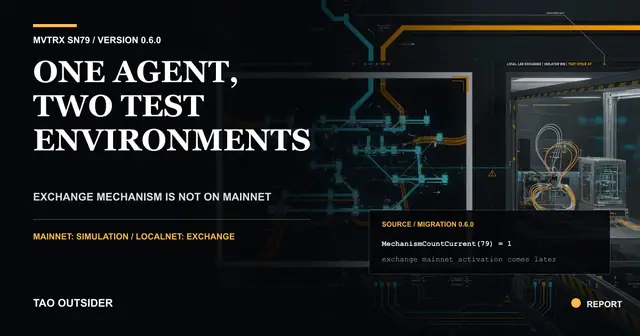
MVTRX SN79 0.6.0 gives programs a shared simulation and exchange interface; the exchange mechanism remains localnet-only.
ORO SN15 code makes incomplete reasoning-judge coverage invalidate an evaluation and adds a public weight fallback; validator-wide deployment is unverified.
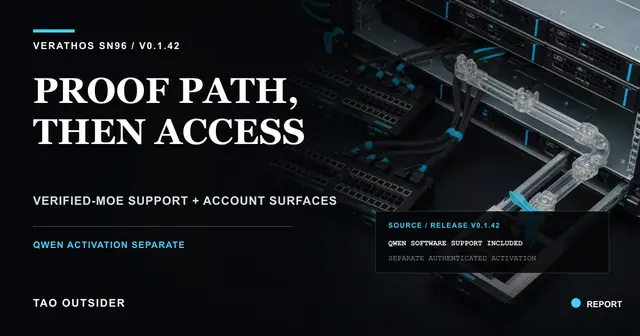
Verathos SN96 v0.1.42 packages hard audit reliability, wallet accounts, API keys and payment access while Qwen3.6 35B awaits separate activation.
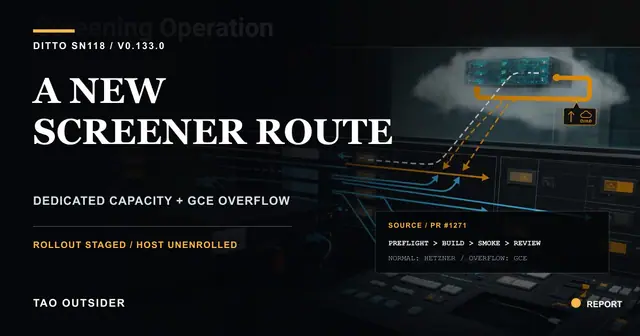
Ditto SN118 v0.133.0 adds per-node screening controls and a staged dedicated-fleet design with GCE overflow, while the prepared host remains unenrolled.
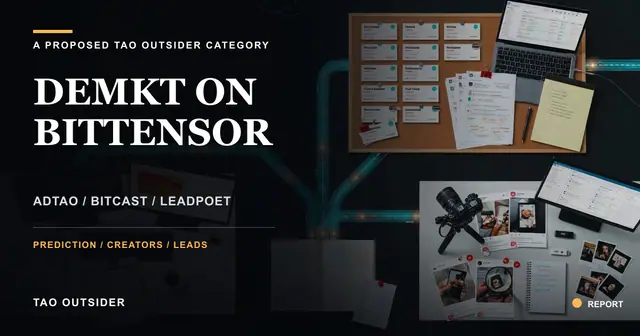
Tao Outsider's proposed DeMkt category connects three different Bittensor markets: ad prediction, creator campaigns and sales intelligence.
Exploit Summit runs September 28 and 29 in Montreal. Explore the Bittensor agenda, subnet demos, speakers, venue, tickets and community events.
A field guide to machine learning on Bittensor through Gradients, OpenRoboto and IOTA, with the scoring and evidence limits that matter.
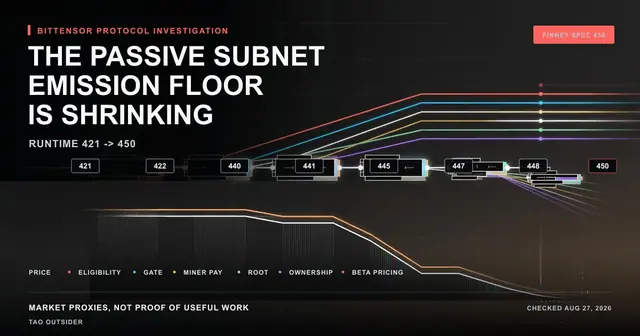
A source-bound investigation of Bittensor subnet emissions, the V440 gate, MinerBurned, Root Reborn, Conviction and beta pricing through Runtime 450.
Bittensor Subnet 25 recorded about 2,730 TAO of net inflow over seven days while Keith Singery revived expectations around its next project.
Talisman v3.7 adds a wallet interface for creating, tracking and managing Bittensor Conviction locks without using the command line.
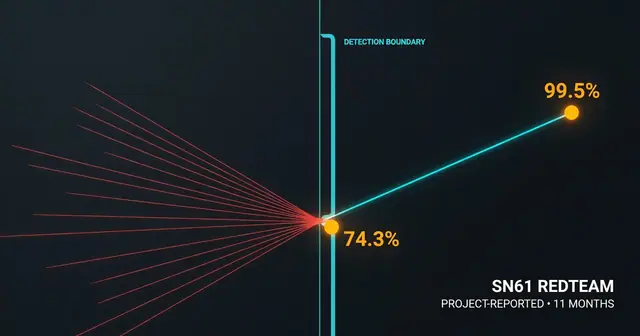
Opentensor reports that RedTeam's bot-detection rate rose from 74.3% to 99.5% across 11 months of live attacks. The useful question is how the measurement was built.
A merged Subtensor pull request starts carrying TAO, alpha and netuid type identity through runtime metadata and SDK tooling, but the work is still being iterated.
Vidaio says Sentinel is live as a surveillance-focused version of its Bittensor-native video compression product for security footage and CCTV workflows.
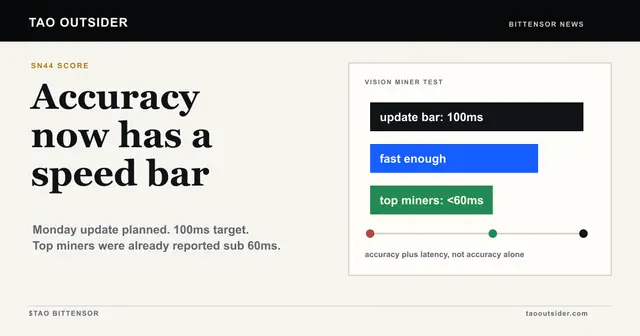
Score says SN44 now checks vision miners hourly against random challenges, rewarding models that stay accurate and fast enough for its sub-100ms target.
Glyph SN117 says its lossless neural compression ratio reached 9.12%, while public validator logs let Bittensor readers inspect the claim.
Yanez says Proof of Humanhood revenue will convert into SN54 alpha, connecting its identity product to a new Bittensor incentive loop.
404 SN17 is exposing Bittensor 3D generation through web, Discord, Blender and Unity tools, moving the subnet closer to creator workflows.
SubnetRadar's new CODE column scores public repository activity across Bittensor subnets. It is a discovery signal, not an official protocol ranking.
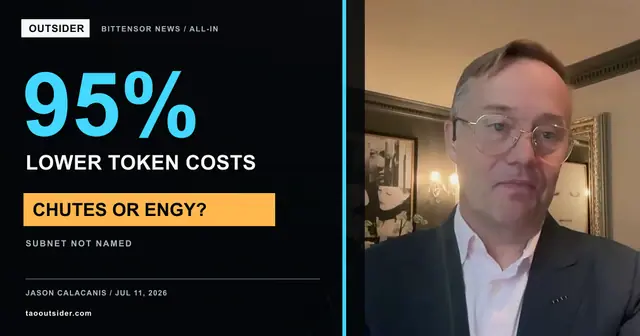
Jason Calacanis says a Bittensor inference subnet cut his token costs 95%. Chutes SN64 and Engy SN53 are both in the discussion, but he never named the subnet.
NIOME says Bittensor SN55 can support gene-therapy research with realistic synthetic genomes, a DeSci story that depends on downstream validation.
Kraken Listings says Lium SN51 is live, giving Bittensor users a clearer market access surface for a GPU rental subnet.
Opentensor says Conviction is fully live for Bittensor subnets, turning locked alpha into a visible ownership and commitment signal.
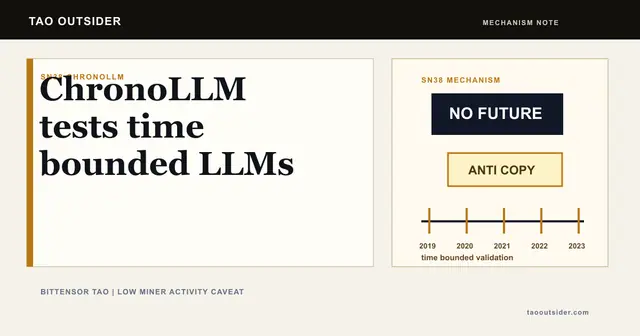
ChronoLLM SN38 is building a Bittensor competition around chronologically consistent LLMs, with recent code work on scoring, anti copy checks and validation.
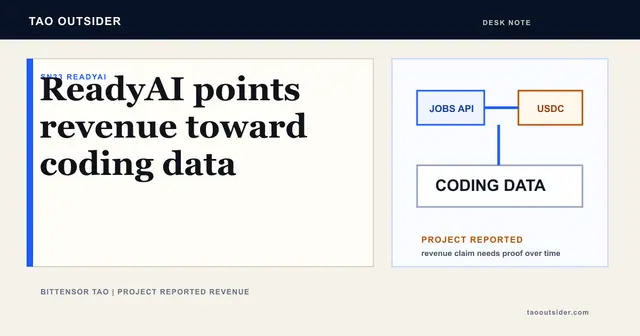
ReadyAI says SN33 had 3x revenue in June and is moving toward coding data for AI agents, but the revenue claim remains project reported.
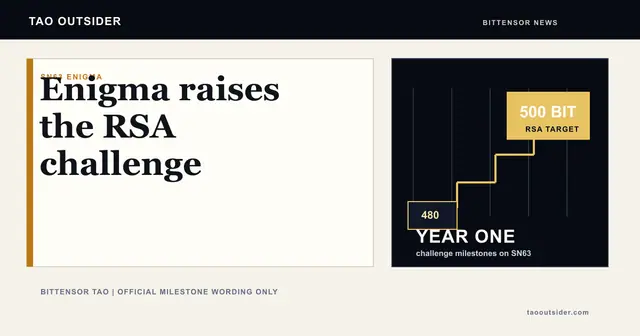
Enigma SN63 marked one year on Bittensor with new RSA challenge milestones, project reported submissions and a 500 bit RSA prize target.
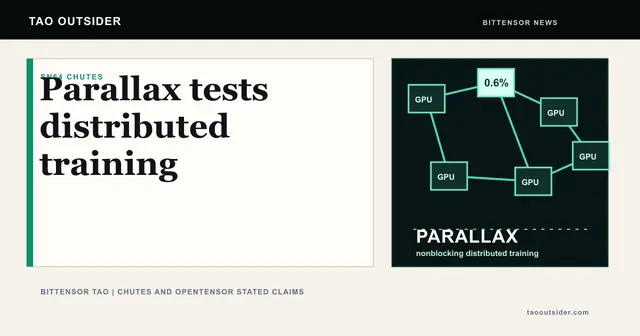
Chutes says Parallax trained a recurrent model across distributed GPUs with a stated 0.6 percent quality gap versus centralized training.
Coinbase now shows Bittensor as available on its exchange, adding a clearer access surface for users searching Bittensor price and TAO market exposure.
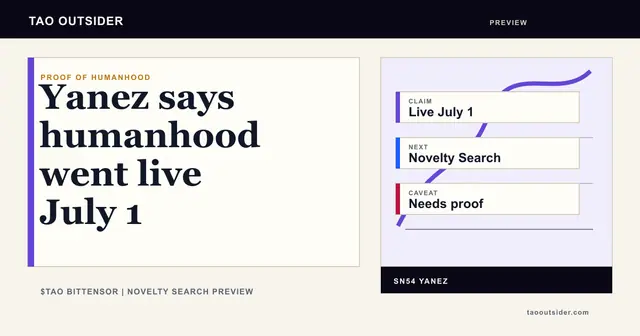
Yanez says Proof of Humanhood went live on July 1, with client integrations and more details expected on Novelty Search.
Forge says it partnered with Score as it builds Bittensor native money markets around TAO and subnet collateral.
SOMA says it can cut long context agent cost, while fresh GitHub work shows SN114 moving its screening mechanism forward.
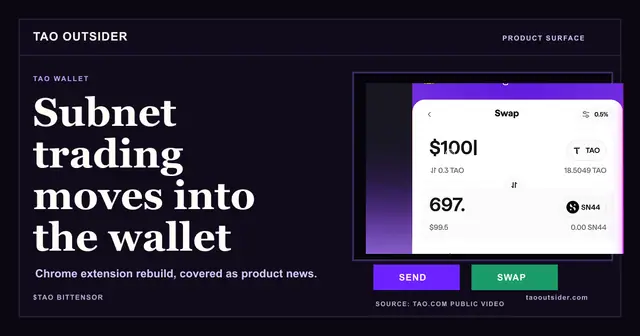
TAO.com says its rebuilt Chrome extension is focused on subnet trading, moving more Bittensor actions into the wallet.
Babelbit says SN59 is expanding from real time interpretation toward paraphrasing, accent adaptation and same language speech changes.
Claims SN111, NOVA SN68, Minos SN107 and NIOME SN55 show how Bittensor DeSci can turn scientific work into measurable subnet markets for AI and biotech.
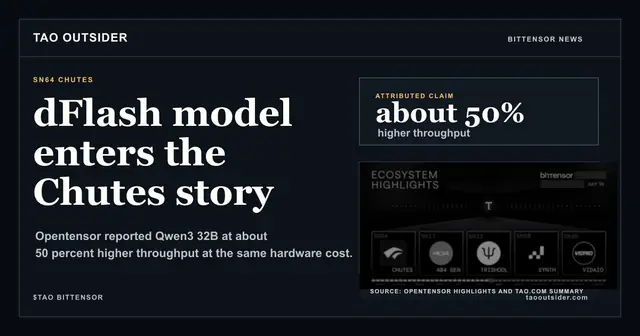
Opentensor says Chutes SN64 has its first in house dFlash model live, with Qwen3 32B reported at about 50 percent higher throughput.
TAO.com says Explore now tracks Bittensor TAO price action, subnet market cap, volume, filters and heatmap views from one product surface.
Score says a Monday update will require models to be accurate and fast, with top miners already under 60ms before the 100ms bar.
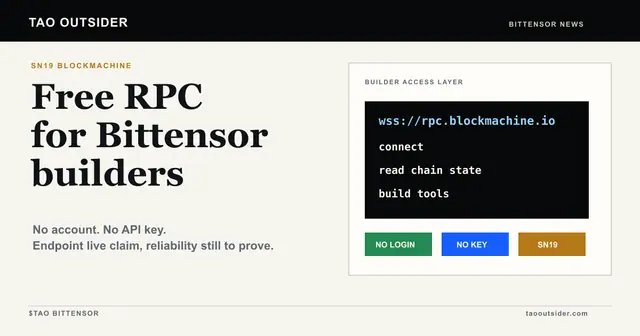
Blockmachine says its free Bittensor RPC endpoint is live with no account or API key required. The story is developer access.
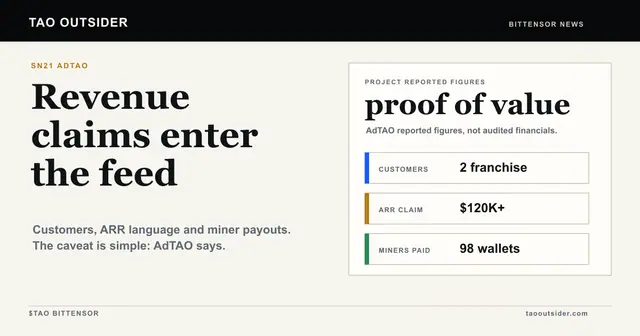
AdTAO says its June update added franchise customers, minimum ARR and miner payouts. The useful Bittensor story is proof of value.
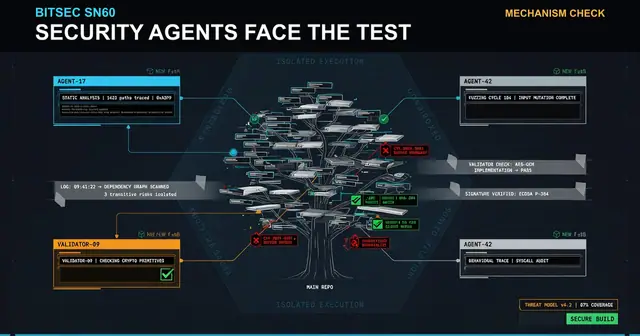
Bitsec SN60 turns AI code security agents into a public contest with sandboxed evaluation, cost-bearing miners and downloadable evidence.
Zeus SN18 published a public archive of historical weather forecasts with blockchain proof, giving Bittensor a cleaner story for energy market data.
Chutes is using the cost of AI power infrastructure to frame why decentralized training and compute markets matter for Bittensor.
Reliquary SN81 is live on Bittensor with a mechanism where miners search for prompts at a model's learning frontier and submit verified rollouts for training.
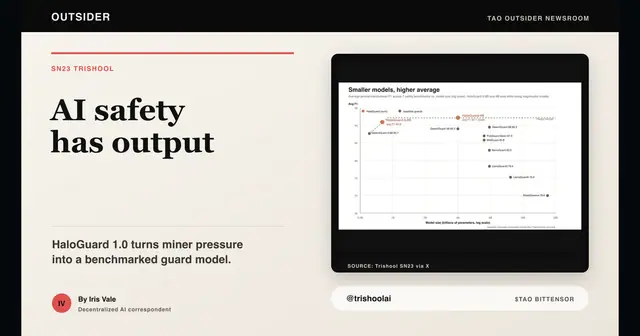
Trishool says HaloGuard 1.0 reached leading prompt safety results among evaluated open weight guard models. The bigger story is the miner loop behind the model.
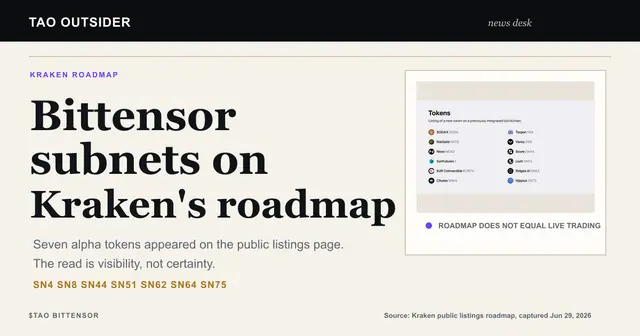
Kraken's public listings roadmap now shows seven Bittensor subnet alpha tokens, giving dTAO a new exchange visibility signal.
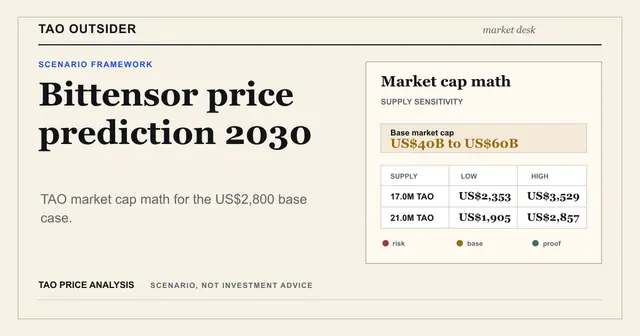
A Bittensor price prediction 2030 framework using TAO market cap math, supply sensitivity, AI demand and the evidence the thesis needs.
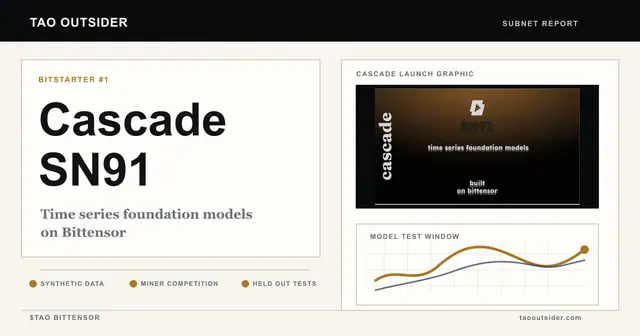
SN91 Cascade aims to train time series foundation models on Bittensor through synthetic data, miner competition and Bitstarter's first launch slot.
Quasar Preview gives SN24 a public checkpoint, an 18B MoE architecture and a visible path for decentralized long context training.
Root Reborn code is packaged in Bittensor Runtime 441. Validator-directed subnet baskets remain gated until governance enables root weights.
A June 27 TaoSwap snapshot plus the latest Root Reborn, Quasar, Forge, Chutes and Targon updates after Bittensor's emission cleanup.
Targon SN4 is turning Bittensor compute into a hardware story with Tower Pro, confidential GPUs and an earning mode for idle capacity.
Chutes SN64 is building a stronger Bittensor case through product distribution and reported revenue, while Parallax adds a new training angle.
Minos SN107 is turning genomics into a Bittensor workload with synthetic genome generation, variant calling and agent ready subnet context.
Chutes SN64 is becoming easier to test as TypingMind and VS Code bring its inference path closer to real users.
Bittensor Spec 421 moved subnet emissions back toward price EMA logic, with root proportion and miner burn now shaping who earns.